
Military
Showing 241–280 of 551 results
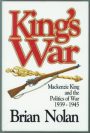
King’s War: Mackenzie King and the Politics of War, 1939-1945
King's War is an extraordinary chronicle of raw politics & ruthless courage; of one man's "divine mission" to save Canada from dismembering itself over controversial wartime issues such as conscription, Japanese internment, the infamous "Zombie" army, and the tragic battles of Hong Kong & Dieppe, where thousands of Canadian soldiers lost their lives.
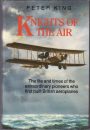
Knights of the Air
Knights of the Air depicts life and times of the extraordinary pioneers who first built British aeroplanes. The aircraft are remembered but many of the men who designed and built them are not. Here are described the personalities and careers of British aviation pioneers.
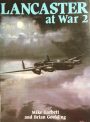
Lancaster at War: 2
Here is a collection of different ex-RAF men recalling the WWII bombing of Germany, with emphasis on repairs and operations.
It provides a holistic look at base support positions and the daily routine, including the food truck driven by a WAAF for tea breaks. They too, served their nation. Each chapter deals with a different function contributing to readiness for a mission.
Starting with unblooded planes, Garbett shows factory scenes, tests, mechanics at work (who rarely got proper credit). It may seem contrary, but the Merlin engine, same as on Spitfires, was ideal for Lancasters. Well known, they would drag their load into the air, then to battle, even give their last during the shooting. At base, the 'erks' would put them right so the ship was ready for ops again. Crews flight test, then, if airworthy, they are fueled and loaded with bombs and ammunition.
And on the other side of the base, crewmen try to down a meal, attend briefing, collect their kit. Trucks deliver them to the waiting Lancs and on time, taxi out for takeoff. Once in the air, they set course for the enemy coast. Then the mission gets interesting....
The Lancaster shares with its contemporary the Spitfire the distinction of having become a legend in its own lifetime. And since the war that legend has continued to grow, fostered by the inevitable nostalgia attending the vanished days of national greatness and the long gone youth of the men who flew and serviced the aircraft. Inevitably too, the legend has its element of myth. The Lancaster was, after all, a weapon of a particularly unpleasant form of warfare. All too often its role was 'nasty, brutish – and short'. And yet – the legend remains, the stories proliferate and photographs abound.
Lancaster at War was first published in 1971 and has been reprinted ten times. It remains one of the classic books of the air war of World War II and is likely to continue in print for years. Lancaster at War - 2 is a totally new collection of Lancaster stories and photographs; it complements the earlier book, it does not duplicate it. Compiled by Mike Garbett and Brian Goulding over several years, much of its material has been, in many instances, inspired by the readers of the first Lancaster at War. The only change is that this book tends to look rather more closely at the men who flew the Lancaster and the men and women who kept it in the air. It is nonetheless a further expansion of the celebrated Lancaster legend and will delight Lanc veterans, air historians and enthusiasts alike.
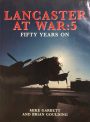
Lancaster at War: 5
There is no name more redolent of Britain's wartime struggle against Nazi Germany than the classic four-engined bomber, the Avro Lancaster. From its introduction to operation in 1942 through to the end of the war, the Lancaster was at the forefront of Bomber Command's aerial onslaught against Germany and Nazi-occupied Europe.
The Lancaster was involved in many of the RAF's most successful and audacious operations, such as the famous ‘Dambusters’ raid and the action that led to the sinking of the Tirpitz, as well as the regular night time raids that wrought so much destruction on German cities and industry.
More than 20 years ago Mike Garbett and Brian Goulding first paid tribute to the Avro Lancaster in Lancaster at War. This pioneering book, which brought together first-hand accounts and historic photographs, was the first of a series of books that has helped to keep the reputation of the Lancaster alive. In this, their latest contribution to the series, the authors have again delved into their files to bring a further fascinating selection of stories from those who flew and worked with the Lancaster.

Leaving a Contrail
In 1954, nineteen-year-old Mike Zrymiak drove into Regina to follow a whim and enlist in the RCAF. So began a thirty-year adventure that saw this one-time Saskatchewan farm boy flying Harvards to Cosmopolitans, nervous students to royalty, during one of the most politically charged eras of modern history—the Cold War. He remembers this career in his latest book, Leaving a Contrail.
As one of seven children born to Ukrainian emigrants during the Great Depression, thoughts of becoming a pilot and an officer were the furthest from anyone’s mind—including Mike’s. Yet Mike discovered his passion in flying, and found himself thriving in an environment that demanded both discipline and initiative. While he, like many of his generation, considers the unification experiment of 1968 the low point of his time in service, his career afforded many high points as well, including serving as Harvard instructor to NATO pilots, pilot with 412 Squadron flying VIPs, protocol officer with Northern NORAD HQ North Bay, commander of Lahr Airfield, studies at the National Defence Staff College, military attaché to Czechoslovakia, deputy commander of Air Command Air Reserves, and commander of CFB Namao.
However, as Vic Johnson, editor of Airforce Magazine, states, Leaving a Contrail is much more than just another military memoir. "[It] expresses many closely held opinions on the DND HQ hierarchy, [including] enforced bilingualism, the effect of ‘human rights’ on Canada’s military and other controversial subjects based on his many years at the ‘Head Shed’ in Ottawa . . . . [yet] is written in a breezy, easy-to-read style and flows from one posting to the next."
One of those postings included a two-year stint behind the Iron Curtain during the 1980s, where more than once he found himself face-to-face with nervous representatives of the ruling Communist regime, their fingers on the trigger.

Légi háború Magyarország Felett / Air War over Hungary (Volume 1)
This is a rare and wonderful look at the Hungarian Airforce during World War II. The book is written in Hungarian, with some English text. Even if you can't read Hungarian, the photographs, drawings, and maps will serve anyone interested in the Hungarian Airforce.
Légi háború Magyarország Felett / Air War over Hungary (Volume 2)
This is a rare and wonderful look at the Hungarian Airforce during World War II. The book is written in Hungarian, with some English text. Even if you can't read Hungarian, the photographs, drawings, and maps will serve anyone interested in the Hungarian Airforce.
Lend-Lease Aircraft in World War II
Lend-Lease Aircraft In WWII Pearcy Full details of UK Lend-Lease contracts for aircraft are revealed, as is an insight into the massiveorganization necessary to fly the war machines to the battle fronts. Included are the stories of th e ferry pilots, the ferry routes they flew, and the aircraft involved. Contains a complete check-list of all aircraft types supplied under Lend-Lease throughout the war.

Les Vehicules de l’US Army: 1939-1945
A French-language book that examines the vehicles of the United States Army from 1939 to 1945.
Lion in the Sky: US 8th Air Force Fighter Operations, 1942-45
Looks at the accomplishments of the volunteer eagle squadrons of the RAF and the squadrons of the U.S. 8th Air Force, and shares the experiences of individual pilots
Sale!
 not rated
Original price was: $14.99.$8.99Current price is: $8.99.
Add to cart
not rated
Original price was: $14.99.$8.99Current price is: $8.99.
Add to cart

Little Book of Spitfire
Little book of Spitfire provides a concise history of one of the great fighter planes of WW2.
Lockheed P-38 Lightning
This is the photographic history of the Lockheed P-38 Lightning. Topics covered include: the XP-38 and YP-38 prototypes, the twin V-12 engines, turbochargers, and the P-38, F-4, and F-5 variants. There are also stories from P-38 test pilots, and details on the fightr groups, squadrons, and commands that utilized the P-38.

Lords of the Lake: The Naval War on Lake Ontario, 1812-1814
Of all the struggles that took place along the border between the United States and Britain's provinces in Canada during the War of 1812, the one that lasted the longest was the battle for control of Lake Ontario. Because the armies depended on the lake for transportation, controlling it was a key element in the war on land. Both Britain and the US threw manpower and resources into efforts to build inland navies, culminating on the British side in a ship larger than Nelson's "Victory." This is the first full-length study of this aspect of the War of 1812
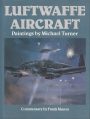
Luftwaffe Aircraft
Michael Turner is one of the best known aviation and automotive artist in the world. This book specifically focuses on German aircraft from World War I up until the 1980s ( the book was published in 1986). Michael's talent brings to life aircraft in their natural elements on ground and air. His work not only deals with the aircraft, many in various angles and closeups, but he includes the human element too. After all, what is an aircraft without pilot, crew and maintenance personal to keep the flying? Michael depicts many of these aircraft involving activities performed by the crews in maintaing their aircraft or preparing for flight. If you are a collector of aviation art, love airplanes, or an art student this book is a perfect source of joy, relaxation, information, and inspiration.
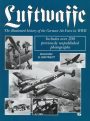
Luftwaffe: The Illustrated History of the German Air Force in WWII
Luftwaffe uses over 250 rare photographs to portray the operations of the German Air Force from the days before the Spanish Civil War through to the desperate days of 1945.
Sale!
not rated
Original price was: $24.99.$9.99Current price is: $9.99.
Add to cart
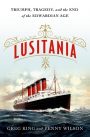
Lusitania: Triumph, Tragedy, and the End of the Edwardian Age
On the 100th Anniversary of its sinking, King and Wilson tell the story of the Lusitania's glamorous passengers and the torpedo that ended an era and prompted the US entry into World War I.
Lusitania: She was a ship of dreams, carrying millionaires and aristocrats, actresses and impresarios, writers and suffragettes, a microcosm of the last years of the waning Edwardian Era and the coming influences of the Twentieth Century. When she left New York on her final voyage, she sailed from the New World to the Old; yet an encounter with the machinery of the New World, in the form of a primitive German U-Boat, sent her and her gilded passengers, to their tragic deaths and opened up a new era of indiscriminate warfare.
A hundred years after her sinking, Lusitania remains an evocative ship of mystery. Was she carrying munitions that exploded? Did Winston Churchill engineer a conspiracy that doomed the liner? Lost amid these tangled skeins is the romantic, vibrant, and finally heartrending tale of the passengers who sailed aboard her. Lives, relationships, and marriages ended in the icy waters off the Irish Sea; those who survived were left haunted and plagued with guilt. Now, authors Greg King and Penny Wilson resurrect this lost, glittering world to show the golden age of travel and illuminate the most prominent of Lusitania's passengers. Rarely was an era so glamorous; rarely was a ship so magnificent; and rarely was the human element of tragedy so quickly lost to diplomatic maneuvers and militaristic threats.

M3A1 Scout Car (Walk Around: 5720)
The White Motor Company began serial production of the four-wheel-drive M3A1 Scout Car in 1940. Covered in quarter-inch face-hardened armor, the vehicle served the US military as scout, command car, ambulance and in some cases as a gun tractor. Armed with one .50 caliber and two .30 caliber machine guns on a skate rail that completely surrounded the f ighting compartment, the M3A1 saw action in the Philippine tropics, the North African desert and during the 1943 invasion of Sicily. However, US forces soon replaced the open-topped M3A1 with other armored vehicles that afforded better coverage. Because the vehicle was widely exported it served on - heavily used by the Red Army on the Eastern Front and by Free French, Belgian, Czechoslovak and Polish forces throughout WWII. Later, France took the vehicle into combat in colonial wars in Indochina and Algeria. Illustrated with more than 200 photographs, plus color profiles and detailed line drawungs.
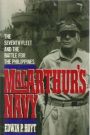
MacArthur’s Navy: The Seventh Fleet and the Battle for the Philippines
The untold story of the U.S. Seventh Fleet is brought brilliantly to life by veteran military historian Edwin P. Hoyt. Two 8-page black-and-white illustration inserts.
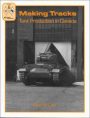
Making Tracks: Tank Production in Canada
The first ever examination of this unknown story. Based on official reports and coupled with many recently uncovered photographs. The book covers the initial manufacture of Valentine tanks and examines the production of the Sexton SP, the Grizzly, the Ram Mks I and II and the virtually unknown Skink AA Tank. 56 pages and 51 illustrations.
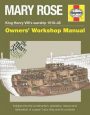
Mary Rose – King Henry VIII’s warship 1510-45: Insights into the construction, operation, rescue and restoration of a great Tudor ship and its contents
From the time that Henry VIII's warship Mary Rose was raised from the Solent in 1982 after 437 years on the seabed, to the present day, she has been constantly in the public eye. The Tudor ship and the 19,000 artifacts recovered from within her are a fascinating time capsule of life in Tudor times as well as offering unique insights into life in Henry's navy.
Maximum Effort: The Big Bombing Raids
Bernie Wyatt Hardcover 164 pages Out of Print.
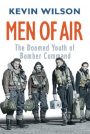
Men of Air: The Doomed Youth of Bomber Command
There were many ways for a combat crew to die during Bomber Command's war of 1944. Over German territory, bursts of heavy flak could tear the wings from their planes in a split second. Flaming bullets from German fighter planes could explode their fuel tanks, cut their oxygen supplies, destroy their engines. In the spring of that year, thousands of young men were shot, blown up, or thrown from their planes five miles above the earth; and even those who returned faced the subtler dangers of ice and fog as they tried to land their battered aircraft back home. The winter of 1944 was the most dangerous time to be a combat airman in RAF Bomber Command. The chances of surviving a tour were as low as one in five, and morale had finally hit rock bottom. In this comprehensive history of the air war that year, Kevin Wilson describes the most dangerous period of the Battle of Berlin, and the unparalleled losses over Magdeburg, Leipzig and Nuremberg. He tells how ordinary men coped with constant pressure of flying, the loss of their colleagues, and the threat of death or capture. And, by telling the story of the famous events of this period - the Great Escape, D-Day, the defeat of the V1 menace - he shows how, through sheer grit and determination, the 'Men of Air' finally turned the tide against the Germans.
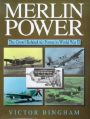
Merlin Power: The Growl Behind Air Power in World War II
The Rolls-Royce Merlin is considered by many to be the most outstanding liquid-cooled reciprocating piston engine of World War II. It powered the majority of Allied aircraft in Europe, including British and American designs. This book examines the origins of the engine's development from its predecessor, the Kestrel, through its single-stage conception to its two-speed, two-stage final form. Twenty-two Merlin powered aircraft are then examined in depth with examinations of development, design, construction and eventual operation. Wonderful design drawings by Lyndon Jones are themselves masterpieces. Included amongst the aircraft described in the book are the Avro Lancaster, Lincoln and York, the de Havilland Mosquito and Hornet, the Bristol Beaufighter II and IV, the Hawker Hurricane and Supermarine Spitfire, the North American Mustang, the Handley Page Halifax, the Curtiss P40 Kittyhawk and the Vickers Wellington.

Merry Hearts Make Light Days: The War of 1812 Journal of Lieutenant John Le Couteur, 104th Foot
A personal memoir by Lieutenant John Le Couteur, a British officer of the war in North America. The author provides us with an interesting, humourous portrait of 19th century Canadian society, as well as many of his own sketches and watercolours.

Messerschmitt Bf 109: 1936-1945
Most famous German aircraft of WWII, in its variety of markings on a variety of war fronts.
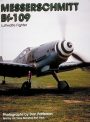
Messerschmitt BF 109: Luftwaffe Fighter
Serving the Luftwaffe in almost every capacity including interceptor, fighter-bomber, night-fighter, photo-reconnaissance, escort fighter, and ground attack, the Messerschmitt Bf 109 was the mainstay of the German air force-with 30,000 aircraft produced-as one of the most successful fighters of WWII.
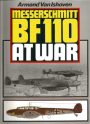
Messerschmitt BF 110 at War
Matched in the early stages of World War II only by the spitfire, the Messerschmitt Bf109 was undoubtedly one of the greatest combat aircraft of all time. It first flew in 1935 then followed the familiar pattern of civil war prototype, record breaker, Spanish civil war combat train of development common to so many other German aircraft of the period. It was the dominant fighter in the Luftewaffe until 1941 and served on all fronts, and with the air forces of Bulgaria, Hungary and Rumania among others.
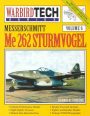
Messerschmitt Me 262 Sturmvogel (Warbird Tech Vol. 6)
Drawings, tech excerpts, engineering data taken from extremely rare German manuals and American evaluation studies, plus photos and details from modern day replicas built in Dallas, Texas during the 1990s. This work covers the early development and production variants of the Me 262 and provides a look at the early designs that were rejected.
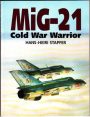
MiG-21: Cold War Warrior
Hans-Heiri Stapfer Softcover 56 pages Out of Print.

Mighty Mac: Airlift, Rescue, Special Operations
Headquartered at Scott AFB, Illinois, the Military Airlift Command is proudly called The Backbone of Deterrence'. It possesses more than 1000 aircraft and has a personnel strength of over 94, 000 active duty people, both military and civilian. It exercises direct command over 13 bases in the United States and controls US facilities at Lajes Field in the Azores and Rhein-Main AB in West Germany. Upon mobilization of Air Force Reserve (AFRES) and Air National Guard (ANG) forces, MAC will gain an additional 63, 000 people and approximately 390 aircraft. Moreover, MAC's assets are supplemented in peacetime by those ot commercial air carriers operating under military contracts and in time of emergency by those of carriers participating in the Civil Reserve Air Fleet (CRAF) programme. - MAC flying units are distributed among three numbered Air Forces. The Twenty-First Air Force, headquartered at McGuire AFB, New Jersey, has 11 Military Airlift Squadrons (two with C-5A/Bs, six with C-14lBs, one with C-22As and C-130Es, one with C-23As, and one with a mix of light transports and helicopters), four Tactical Airlift Squadrons with C-130Es, one Aeromedical Airlift Squadron with C-9As, and one Air Base Squadron with C-12s and C-21s. The Twenty-Third Air Force, headquartered at Hurlburt Field, Florida, conducts special operations as its primary mission. Its other missions include combat rescue, peacetime rescue coordination, security support for intercontinental ballistic missile sites, aeromedical evacuation, facility flight check operations, weather.
Mikoyan MiG-29: Design and Development of Russia’s Super Fighter
Briefly traces the history of the MIG-29, describes its physical characteristics and capabilities, and compares it with Western fighters.
Military Airfields of Britain: Southern England: Kent, Hampshire, Surrey and Sussex
Entries cover every military airfield within the counties, from WW1 to the present day and comprise: Brief history of the airfield, construction and use including decoy sites; comprehensive list of flying units with dates and aircraft types; list of HQ units based at the airfield; details of memorials; maps and plans of almost every airfield; location details; selection of period photographs. The airfields of Southern England like Biggin Hill, Kenley and Hawkinge played host to the greatest part of the action of the Battle of Britain. Farnborough, birthplace of British aviation, lies in Hampshire and many regional airfields played host to vital anti-submarine patrols during WW1.
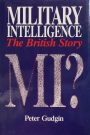
Military Intelligence: The British Story
What is military intelligence?
Who collects it, collates it and makes use of the finished product?
How are the various services organized?
What are the types of Intelligence, and the methods used in their collection?
In this volume, these and many other questions are explained as the basis for a further, more detailed, examination of the world of defence Intelligence community.