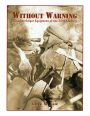
This long awaited book examines the many styles of sniper rifles and optics used by the Canadian Army. Starting with the Ross rifle of Great War fame, mated to the Warner & Swayze telescopic sight, the book examines issues and usage of a variety of sniper rifles. World War II saw a medley of equipment used in the early days. There is all new information on Small Arms Limited (Long Branch) and their experimental rifles as well as information on Research Enterprises Limited and the experimental scopes they developed for the Long Branch rifles. Post-war rifles used by the Canadian Army include Garand, Parker-Hale C3 and C3A1, The FN C1 and C2 (FAL) and the incredible MacMillan Bros Tac50.
The entire text is based on original research at the Canadian National Archives and the Canadian Department of National Defence.
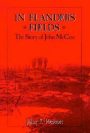
Called the most talented Canadian physician of his time, John McCrae (1872-1918) achieved international fame by his poem, "In Flanders Fields." The most popular English-language poem of the First World War, it has made the poppy inseparable from memories of war.
John McCrae's life was a microcosm of the years of tumultuous changes in late Victorian Canada. Son of Scottish pioneers, he fought in the Boer and First World Wars, taught medicine art McGill University, was a member of the influential English-speaking elite of Montreal, and a friend of the great and near-great. Deeply religious, he was marked by kindliness and laughter.
This book describes the full-blooded vigour of John McCrae's early and middle years, the writing of "In Flanders Fields" at the height of a battle in 1915, the impact of the poem, and the tragedy of his last years working in a Canadian hospital in war torn France.
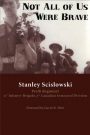
This is the story of a young mans journey through World War II. It covers a wide cross section of the strengths and weaknesses of young men not attuned to killing, and not mentally prepared to face the horror of seeing their close friends die violent deaths in battle. The story is about the hopes, the prayers, the fears, the daily miseries and even the lighter moments that the aspiring heroes of the Perth Regiment experienced on the Italian front as part of 11th Infantry Brigade, 5th Canadian Armoured Division.
As the title suggests, from his first battle inoculation Private Stan Scislowski realizes he is not destined for the heroic role to which he once aspired. His fears affect him deeply: his burning dream of returning home a national hero becomes more and more improbable, and his attempts to come to terms with his un-heroic nature make the war as much a mental battle as a physical one. His story is much like that of the overwhelming number of Canadians who found themselves in the cauldron of war, serving their country with all the strength they could find, even when that strength was fading fast.
Not All of Us Were Brave focuses not on the heroes, but on the ordinary soldiers who endured the mud, the misery, the ever-present fear, the inspiration, and the degradation. The narrative holds nothing back: the dirty linen is aired along with the clean; the light is shown alongside the dark. It shows what war is all about.