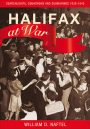
From early September, 1939 Halifax was at war. When the war began, people gathered along the waterfront to watch the fleet of the Royal Canadian Navy leave. For the next six years, the city was uniquely affected by the war's events. Halifax at War explores this transformation of the city and civilian life, making use of a rich blend of historical, biographical and archival sources.
Bill Naftel describes the incredible demands placed upon the city due to the war -- which far exceeded any other city in Canada. Halifax's infrastructure was barely able to cope as thousands of soldiers and sailors streamed through the city and thousands more arrived for war-related work. At first the war was welcomed for the jobs it created and the prosperity it brought, but soon crowding and inflated prices proved a trial for native Haligonians as well as thousands of temporary residents.
Reflecting new insights derived from primary documents, this lively history offers a new perspective on the impact of the war on Canada and Canadians, and on the many ways in which Halifax played a unique role in supporting Canada's contribution to the allied war effort.
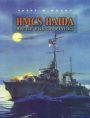
This is the story of Canada's greatest destroyer, the aggressive and hard-hitting Haida. She is Canada's most decorated warship, winning honours in the Arctic, English Channel, Normandy, Bay of Biscay, and Korea. Her first commander, the late Harry DeWolf, is Canada's most famous naval hero. Since her decommissioning in 1963, Haida, the last of the feisty Tribals, has been preserved as a national naval memorial. HMCS Haida's story is an account of sharp-end war; of Canada's naval experience in Murmansk convoys and British Home Fleet protection; in English Channel operations, when Canadian and British naval units swept the German naval ensign from the seas; in the destruction of a U-boat, and in the liberation of Trondheim, Normay. Haida was always in on the action. She sank more enemy military tonnage than any other Canadian vessel.Haida's finest days were during the intense naval operations leading up to D-Day. With her sisters Huron and Iroquois and the ill-fated Athabaskan, with British and Polish men of war, she engaged German destroyers, torpedo boats, minesweepers and others and never lost. She vigorously carried the war to the enemy at great risk. Her postwar career including two tours in the Korean theater displays the same brave purpose in her officers and men, trained professionals and dedicated sailors. Barry Gough has written a new chapter in Canadian naval annals, showing that the best equipment brings forth the best results when good fortune and superb seamanship and weapons handling are matched in equal measure Haida's illustrious story.