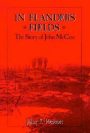
Called the most talented Canadian physician of his time, John McCrae (1872-1918) achieved international fame by his poem, "In Flanders Fields." The most popular English-language poem of the First World War, it has made the poppy inseparable from memories of war.
John McCrae's life was a microcosm of the years of tumultuous changes in late Victorian Canada. Son of Scottish pioneers, he fought in the Boer and First World Wars, taught medicine art McGill University, was a member of the influential English-speaking elite of Montreal, and a friend of the great and near-great. Deeply religious, he was marked by kindliness and laughter.
This book describes the full-blooded vigour of John McCrae's early and middle years, the writing of "In Flanders Fields" at the height of a battle in 1915, the impact of the poem, and the tragedy of his last years working in a Canadian hospital in war torn France.
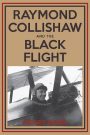
Ever wondered what it would be like to fly a biplane or triplane in the First World War? Raymond Collishaw and the Black Flight takes you to the Western Front during the Great War. Experience the risks of combat and the many close calls Collishaw had as a pilot, flight commander, and squadron leader. Understand the courage Collishaw and his fellow flyers faced every day they took to the air in their small, light, and very manoeuvrable craft to face the enemy.
As the third-highest-scoring flying ace among British and colonial pilots in the First World War, scoring 60 victories, Collishaw was only surpassed by Billy Bishop and Edward Mannock. This book traces Collishaw's life from humble beginnings in Nanaimo, British Columbia, to victories in the skies over France.
No-one interested in the history of Canadian military aviation will want to miss this 3-volume series from Larry Milberry!
The first title dedicated solely to the postwar RCAF and the largest of all general RCAF histories. Beginning with the post-1945 slowdown, you'll read how Canada disposed of 1000s of surplus aircraft, whether burned, buried, or sold to get-rich-quick entrepreneurs. Next? The panicky built-up to Korea and the Cold War. Here are all the details about Vampires, Mustangs, Sabres & CF-100s; North Stars & C-119s; Lancasters, Neptunes & Argus; Harvards & T-33s. One chapter deals with R&D projects, whether Arctic navigation, flight test, or weapons; one about the CF-105 will be an eye-opener for those taken in by the Arrow myth makers. Vol.3 has hundreds of fresh colour photos from the 1950s-60s. Dozens of reminiscences enliven this era. Vol.3 takes you beyond unification to the 1970s.