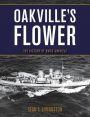
The story of HMCS Oakville, a corvette that fought U-boats in WWII and remains a hero to its hometown in Oakville, Ontario.
This is an in-depth look at the history and legacy of HMCS Oakville, a Canadian World War II corvette that fought in the Battle of the Atlantic, and was one of the few corvettes to sink a U-boat. From its creation through its christening off the shores of its namesake town, its exploits at sea, the famous encounter with U94, and the ships lackluster end, Oakvilles is a story that showcases not only our nations proud naval heritage, but also the importance of remembrance.
Oakvilles Flower sets the scene of naval war in the Atlantic ? the battles between convoys, stealthy U-boats, and the lowly corvettes that formed the backbone of the Royal Canadian Navy. We follow Oakville, one of those corvettes, through its rise and fall as a Canadian naval legend, to its revival in the town of Oakville, championed by the local Sea Cadet Corps that shares its name and safeguards its legacy.
This is the story of a young mans journey through World War II. It covers a wide cross section of the strengths and weaknesses of young men not attuned to killing, and not mentally prepared to face the horror of seeing their close friends die violent deaths in battle. The story is about the hopes, the prayers, the fears, the daily miseries and even the lighter moments that the aspiring heroes of the Perth Regiment experienced on the Italian front as part of 11th Infantry Brigade, 5th Canadian Armoured Division.
As the title suggests, from his first battle inoculation Private Stan Scislowski realizes he is not destined for the heroic role to which he once aspired. His fears affect him deeply: his burning dream of returning home a national hero becomes more and more improbable, and his attempts to come to terms with his un-heroic nature make the war as much a mental battle as a physical one. His story is much like that of the overwhelming number of Canadians who found themselves in the cauldron of war, serving their country with all the strength they could find, even when that strength was fading fast.
Not All of Us Were Brave focuses not on the heroes, but on the ordinary soldiers who endured the mud, the misery, the ever-present fear, the inspiration, and the degradation. The narrative holds nothing back: the dirty linen is aired along with the clean; the light is shown alongside the dark. It shows what war is all about.
No-one interested in the history of Canadian military aviation will want to miss this 3-volume series from Larry Milberry!
Volume 2 completes 1939-45. Ch.1 & 2 cover night fighters, intruders & medium bombers. Much on Canadians on Defiants, Beaufighters & Mosquitos, the former a period of frustration, the latter of success. Many personal stories end happily, but sad times also fill the pages. Ch.3 deals with Bomber Command, beginning with Canadians on RAF squadrons, then moves to the first RCAF squadrons on Hampdens & Wellingtons. With some 70,000 words, Ch.3 says much of the bombing campaign. If CAFWP has a brutal chapter, this is it -- some 10,000 young Canadians die on bombers. Chief data sources are the official 6 Group records + diaries, logs & albums of the men who were there. Ch.4 studies Coastal Command on Beaufighters, Liberators, Sunderlands, etc. 60,000 words of new coverage and photos. While RCAF at War revealed new material on the Hornell VC, more is added here. Special coverage of 422 & 423 Sqns (Sunderlands) is not to be missed, nor are the excerpts from combat reports. Air transport is the theme of Ch.5, with more of Norseman, Dakota, Fortress, etc.