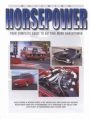
A subject every man is interested in - horsepower! This book will attract every driver who takes pride in his car and its performance. Examples are given throughout this amply illustrated book. Building Horsepower is all about performance. Chapters are added to help you increase the power under your bonnet as well as some feature cars whose reputations rest on a massive amount of grunt.
not rated$49.95Original price was: $49.95.$20.00Current price is: $20.00.Add to cart
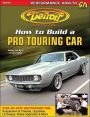
Trends in automotive modification come and go; some are outlandish, some are practical. Currently, the trend is Pro Touring. While it's expensive, it definitely leans toward the practical. It was originally a name used for GM cars, but "Pro Touring" has come to mean a style for all cars from many years. It is essentially the art of adding modern technology to aged designs to create cars that start, stop, drive, handle, and behave like modern performance cars. You can do this in many ways and choose from many suppliers.
Detroit Speed is at the forefront of the Pro Touring movement. The company is in a unique position to design and manufacture parts; they also build cars and test the parts for their effectiveness on the street and track. Kyle and Stacy Tucker have used their considerable engineering skill and marketing savvy to create a unique company that leads the Pro Touring movement.
You will discover the history of Detroit Speed and how they design performance parts. Learn-to-install sections cover front subframe and rear suspension assemblies as well as upgrades to wheel tubs, brakes, fuel system, driveline, cooling system, and more; also included is an LS swap. The featured cars are customer builds as well as Detroit Speed test cars including a number of different Chevrolet products, a 1966 Mustang, and a 1969 Charger. "Detroit Speed's How to Build a Pro Touring Car" is an important edition to every performance
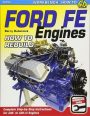
Ford FE engines, which were manufactured from the late 1950s all the way through the mid-1970s, were designated as the large-displacement engines in the Ford lineup. FE means Ford Edsel, and reflects an era when Ford sought to promote the Edsel name. The design of these engines was implemented to increase displacement over its predecessor, the Y-Block engines of the previous decade. Early models were fairly modest in displacement, as were most big-blocks of the era, but they grew quickly to fill the needs of rapidly changing chassis requirements and consumer demand for larger vehicles. As it grew, the FE engine performed admirably as a heavy passenger car and light truck engine. It also became quite accomplished in performance circles, winning the 24 Hours of Le Mans, as well as powering Ford's muscle car and drag racing programs in the mid- to late 1960s.
In Ford FE Engines: How to Rebuild, you will learn every thing you need to know to rebuild one of these legendary engines. CarTech's unique Workbench series format takes you step-by-step through the entire rebuilding process. Covered are engine identification and selection, disassembly, cleaning, parts analysis and assessment, machine shop processes, replacement parts selection, re-assembly and start-up/break-in techniques. Along the way you find helpful tips on performance upgrades, trouble spots to look for, special tools required, and professional builder's tips.
FE master, owner of Survival Motorsports, and veteran author Barry Rabotnick shares all of his tricks and secrets on building a durable and reliable FE engine. Whether you are simply rebuilding an old truck for reliable service use, restoring a 100-point show car, or building the foundation for a high-performance street and strip machine, this book will be an irreplaceable resource for all your future FE engine projects.


Reviews
There are no reviews yet.