Frank Barr was one of the most interesting of the early aviation pioneers in Alaska. At age 28, the former calvalryman, parachute jumper and test pilot, signed on to a Yukon gold expedition in 1932 as a back up pilot. After the expedition failed to find enough gold, Frank Barr stayed in the north country and spent the rest of his career as a bush pilot. He flew every early plane from the Jenny to the Super Cub, carrying passengers and freight to remote villages in Alaska and the Yukon.
In 1948 Barr was elected to the Territorial Senate, and held that seat when in 1955 he one of the 55 Alaskans chosen by the people to write a state constitution. Today Alaska's state constitution is considered one of the best state constitutions ever written. Alaska was admitted to the union in 1959.
In his later years he flew bush routes for Alaska Airlines and became manager of the northern division. Even in retirement down in the lower forty-eight states, he conducted tours to Alaska and Mexico until he finally retired for good in 1974.
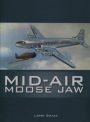
Mid-Air Moose Jaw explores the mystery and expels the rumors of the 1954 mid-air collision over the city of Moose Jaw, Saskatchewan. A NATO Harvard training plane and a Trans Canada Air-Lines North Star collided in clear weather with the loss of thirty-seven lives. The airliner crashed into a home on Third Avenue Northeast, killing Martha Hadwen, the only fatality from Moose Jaw. Ross School, with 350 students was a mere 400 feet from the crash site. Many Moose Jaw residents witnessed the collision. Varied eyewitnessesÂ’ accounts and surviving family membersÂ’ recollections are included. While newspaper coverage of this disaster was extensive, Mid-Air Moose Jaw ferrets out many untold anecdotes giving the reader a greater in-depth understanding of this horrific disaster.
How and why this mid-air collision took place is covered extensively with careful reference to the three Boards of inquiry. While some readers may find this aspect technical, the book is balanced with the human and sociological aspects following the disaster. Mid-Air Moose Jaw challenges pilots to practice proper collision avoidance techniques. At the same time the book reminds administrators and legislators of their responsibility to act diligently and promptly to potential aviation hazards. Since 1954 flying has become much safer with advanced technology. Mid-Air Moose Jaw is a tribute to those who paid with their lives to make aviation safer yet never to take that safety for granted.
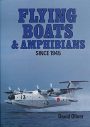
It may come as a surprise to learn that some 1,700 multi-engined military and commercial flying boats and amphibians have been built since 1945. The development of compact, reliable and economical turbo-prop engines in recent years has given the flying boat and amphibian a new lease of life, not only by extending the lives of some types by replacing existing piston engines, but also by encouraging new designs that are able to compete favourably with landplanes in terms of economy while retaining their unique ability to land on water if and when necessary. There are currently more than 350 multi-engined types operating worldwide in the search and rescue (SAR) and inshore maritime reconnaissance (MR) roles with the military, the commercial transport of people and supplies in remote areas, and fighting fires. This book describes 12 major multi-engined flying boats and amphibians that have been produced, albeit in small numbers in some cases, in 7 different countries since 1945. All have either served with operational military units or have been sold to commercial operators, with which many of them continue to serve to this day.
Reviews
There are no reviews yet.