Frank Barr was one of the most interesting of the early aviation pioneers in Alaska. At age 28, the former calvalryman, parachute jumper and test pilot, signed on to a Yukon gold expedition in 1932 as a back up pilot. After the expedition failed to find enough gold, Frank Barr stayed in the north country and spent the rest of his career as a bush pilot. He flew every early plane from the Jenny to the Super Cub, carrying passengers and freight to remote villages in Alaska and the Yukon.
In 1948 Barr was elected to the Territorial Senate, and held that seat when in 1955 he one of the 55 Alaskans chosen by the people to write a state constitution. Today Alaska's state constitution is considered one of the best state constitutions ever written. Alaska was admitted to the union in 1959.
In his later years he flew bush routes for Alaska Airlines and became manager of the northern division. Even in retirement down in the lower forty-eight states, he conducted tours to Alaska and Mexico until he finally retired for good in 1974.
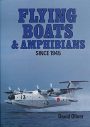
It may come as a surprise to learn that some 1,700 multi-engined military and commercial flying boats and amphibians have been built since 1945. The development of compact, reliable and economical turbo-prop engines in recent years has given the flying boat and amphibian a new lease of life, not only by extending the lives of some types by replacing existing piston engines, but also by encouraging new designs that are able to compete favourably with landplanes in terms of economy while retaining their unique ability to land on water if and when necessary. There are currently more than 350 multi-engined types operating worldwide in the search and rescue (SAR) and inshore maritime reconnaissance (MR) roles with the military, the commercial transport of people and supplies in remote areas, and fighting fires. This book describes 12 major multi-engined flying boats and amphibians that have been produced, albeit in small numbers in some cases, in 7 different countries since 1945. All have either served with operational military units or have been sold to commercial operators, with which many of them continue to serve to this day.
In his sixth aviation history book, author Bruce McAllister takes the reader on a photographic journey, tracing the development of aviation in the Yukon Territory. There are chapters on the very first aircraft to operate in the Yukon, how aviation linked communities, the construction of the Alaska Highway, the role of the RCMP Air section, epic search and rescue missions, the air tankers role in firefighting, the opening up of the Arctic, the glacier pilots, and aerials of the old airstrips.



Reviews
There are no reviews yet.