
Automobile Makes & Models
Showing 1561–1600 of 2370 results
Morgan Four Owners Workshop Manual & Buying Portfolio 1936-1981
This is a comprehensive owners manual for the DIY enthusiast.
It covers Climax, Standard, Ford & Triumph engines, fuel & cooling systems, ignition, transmission, clutch, gearboxes, suspension, steering, brakes, electrics, bodywork and services. Also included is a portfolio of articles including advice on acquiring a good pre-owned four cylinder Morgan.
Models covered in this manual include: Morgan 4/4 Series 1 to 5 1936-1968, Morgan 4/4 1600 1968-1981, Morgan Plus 4 1950-1969,and Morgan Plus 4 Plus 1963-1966.
Morgan Sports Cars: The Heritage Years 1954-1960
This book covers that exciting period when it was possible to buy a Morgan from the showroom, use it for commuting all week, and then compete with it in motor sport at the weekend with an excellent chance of success. We cover such events worldwide and also the factory developments over these years. Unusually we have published two Forewords, one from Lew Spencer describing how Morgans became popular and successful in the USA, and one from Charles Morgan, describing what it was like growing up in the Morgan family at this time.
Morgan Sports Cars: The Lawrence Tune Years 1961-1964
This book is the third in a series by Jake Alderson Alderson and Chris Chapman detailing the competition and development history of the four-wheeled Morgan. However, it reads well as a stand-alone volume. It covers the exciting period in the early Sixties when the Plus 4 was at the peak of its success and there was much activity at the factory to secure the survival of the marque during a period of falling sales.
Morgan nearly always tested new ideas in works competition cars before adopting them for production, so the authors believe that the Morgan story is best told chronologically. This has been achieved through exhaustive research over many years with the encouragement of the late Peter Morgan who wanted the story of his marque to be told in detail. Research has been enabled through access to company records and countless interviews with the people involved who have contributed anecdotes, behind the scenes information and many photographs not previously published.
The book takes its title from the involvement of Chris Lawrence and his LawrenceTune team who had begun privately developing the Plus 4 model for racing in the late 1950s. By 1961 Lawrence was running the factory works team of racers in the UK and Europe, regularly humbling significant opposition including Porsche. In 1962 he took Peter Morgan's new low-line Super Sports design to Le Mans with co-driver Richard Shepherd-Barron, who contributes the foreword to the book, and finished 13th overall and first in class.
Morgan competition around the world is covered in detail, including the important scene in the US, Morgan's biggest market at the time. It was a pivotal period for the company's future. Important developments are fully covered, including the radical glass fibre bodied Plus 4 Plus and the evolution of the Ford powered 4/4 into a proper sports car.
Morgan Ultimate Portfolio 1968-1990
This Portfolio traces Morgan's 4-wheeler cars from the introduction in 1978 of the Rover V8 powered Plus 8. This engine was used in Morgans for 35 years.

Morgan: The History of a Famous Car
This is a factory promotional handout from the early 1970s. It provides a brief history of Morgan automobiles.
The handout contains 33 B&W illustrations.

Morgans to 1997: A Collector’s Guide
One of the UK's most experienced and respected motoring writers traces the products of this most British of car manufacturers, from the pioneering three-wheelers of more than a century ago through to the first 62 years of four-wheeled car production. "Morgans To 1997" is a comprehensive guide to a range of cars that have commanded a fanatical following and led to the creation of a vast collection of flourishing owners' clubs throughout the world. After a review of four decades of three-wheeler production, the author traces and describes the four-wheelers from the original 4/4 through the Plus 4 to the blistering Plus 8 in their different body styles, and takes the reader into the Morgan factory for a rare insight into the traditional production techniques still adopted in the manufacture of these hand-built cars. Technical specifications and performance figures add to the reference value of this attractive volume.
Morris 1100 Driver’s Handbook
Morris Motors Ltd. Published: October 1967 Part No. AKD3896H Softcover 72 pages Out of Print. New old stock.
Morris 1100 Driver’s Handbook
Morris Motors Ltd. Published: June 1962 Part No. AKD3229A Softcover 60 pages Out of Print. New old stock.
Morris Minor 1000 AKD3922
Driving controls, & instruments, care and maintenance for the 4-door Saloon. Drawings and wiring diagrams.
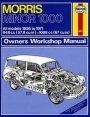
Morris Minor 1000 Manual: All Models 1956 to 1971
All models 1956 to 1971. 948cc (57.8 cu in), 1098 cc (67 cu in) Covers all models of Morris Minor 1000 Saloon, Convertible and Estate (Traveller) with 948 cc or 1098 cc engine.
Morris Minor 1952-71 Autobook
Kenneth Ball Hardcover 130 pages Out of Print. New old stock.

Morris Minor Workshop Manual
Highly detailed maintenance and repair instructions for service supervisors, qualified & less experienced mechanics.
Motion Performance: Tales of a Muscle Car Builder
Motion Performance tells the inside story of how it all happened. Brilliantly illustrated with period pictures and modern color photos, the book takes readers along as Cobras, Chevrolets, Oldsmobiles, even Volkswagen Beetles roll into the shop to get torn down and rebuilt into cars unbeatable on the streets and drag strips.
Marty Schorr gives a first-hand account of seven years of high-performance life--and of how it all came to a screeching halt at the hands of the U.S. Department of Transportation and the Environmental Protection Agency. A once-in-a-lifetime tale of power and speed, told by one of the principals who put that performance within reach, Motion Performance makes the story of a briefly and thrillingly lived dream available to everyone.
Motor & Thoroughbred & Classic Cars Ferrari 1976-1984
Motor & Thoroughbred & Classic Cars Ferrari 1976-1984 contains articles from Motor and Thoroughbred & Classic Cars magazines including road tests, comparisons, and specifications.
Ferrari models covered include: Daytona 365 GTBé4, Spyder, 250GT, GTO, 275GTB, Dino 246, Mondial 8, T5, 400, 308GTB, GTS, GTBi, Turbo, 340MM, 512BB, 512i, and Quattrovalvole.
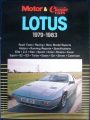
Motor & Thoroughbred & Classic Cars: Lotus 1979-1983
A collection of 35 articles reprinted from contemporary magazines. Articles include: Road Tests, Racing, New Model Reports, History, Running Reports, Specifications, Elite, 2.2, Elan, Sprint, Eclat, Riviera, Excel, Esprit, S2, S3, Turbo, Essex, Six, Seven and Caterham.

Motor and Thoroughbred & Classic Cars on Ferrari 1966-1976
This is an early Brooklands Publications featuring reproductions of Motor & Classic Cars articles. It covers road tests, racing, 212 Export, 225 246 GT, 250 Testa Rossa, GT Lusso, 275 GTB GTB4, GTO, 312B, 330GT, P4, GTB/4, GTC340 MM, 365 P2/3, GTB/4, 4A, GT2+2, GTC Dino, 308 GT4, Berlinetta Boxer, GTB, 2+2.
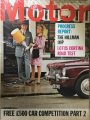
Motor Magazine (Sept 17, 1966)
This issue covers:
The Hillman IMP
Lotus Cortina Road Test
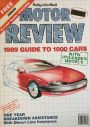
Motor Review: 1989 Guide to 1000 Cars
ISBN 10 – 0851444628 Softcover 104 pages Out of Print. New old stock.

Muscle Cars in Detail: 1964 Pontiac GTO
By the mid-1960s, the American automotive market was yearning for faster, more responsive, and sportier cars, and a crew of high-performance enthusiasts at Pontiac recognized this. Large V-8s were commonly installed in full-size cars, but performance was hampered by pure chassis weight. Under the guidance of Bunkie Knudsen, John DeLorean, Bill Collins, and others, Pontiac installed the high-performance 389 V-8 into the nimble and lightweight intermediate-size LeMans chassis. It was a watershed moment for Pontiac; the 1964 GTO delivered astounding performance and created the muscle car blueprint that the Detroit manufacturers followed in the 1960s and 1970s.
This volume in the Muscle Cars In Detail Series delivers a comprehensive review of this trend-setting and historic car. The GTO housed a 389 V-8 engine with a single Carter AFB 4-barrel carburetor, and along with dual exhaust and 4-speed manual transmission, it supplied extraordinary performance. To improve traction and handling, the GTO was fitted with stiffer springs, limited-slip differential, larger-diameter front sway bar, and wider wheels. And to give it panache, the GTO was adorned with distinctive badges and a hood scoop. The 1964 GTO is a landmark car, and this book goes well beyond the glossy overview of other books about this car.
All In Detail Series books include an introduction and historical overview, an explanation of the design and concepts involved in creating the car, a look at marketing and promotion, and an in-depth study of all hardware and available options, as well as an examination of where the car is on the market today. Also included is an appendix of paint and option codes, VIN and build-tag decoders, as well as production numbers.

Muscle Cars in Detail: 1969 Plymouth Road Runner
The late 1960s was an interesting time in the automotive world. Muscle cars, as we now know them, were well established, with all manufacturers joining the horsepower race. You could walk into the showroom for any brand from any manufacturer and find a variety of performance models. Competition being what it is, the manufacturers were looking for ways other than winning races to lure buyers into the showrooms and entice them to buy their products. Some tried to accomplish this with fancy marketing schemes and graphic paint packages and decals, and for the first time, some tried to win over buyers with price.
Volume No. 5 of CarTech's In Detail series covers the 1969 Plymouth Road Runner. It was an interesting marriage of a car that attempted to appeal to potential buyers with a low cost, light weight, and potent bare-bones package. It also added a brilliant marketing strategy of partnering with a famous studio and a popular cartoon character. The end result was a wildly popular, big-block, affordable muscle car with great graphics and a cool beep-beep horn. The public loved it.
All In Detail Series books include an introduction and historical overview, an explanation of the design and concepts involved in creating the car, a look at marketing and promotion, and an in-depth study of all hardware and available options, as well as an examination of where the car is on the market today. Also included is an appendix of paint and option codes, VIN and build-tag decoders, as well as production numbers.

Muscle Cars in Detail: 1969-1970 Ford Mustang Boss 429
Not to be outdone by Chrysler, Ford had to build and field its own race-duty big-block to compete with the 426 Hemi in drag and stock car racing. In competition trim, the Boss 429 powered Ford and Mercury stock cars to victory in NASCAR and the Mustang to many wins in drag racing. With this exclusive racing pedigree, the Boss 429 is among the most valuable and rare Mustangs ever built.
The project was the brainchild of Bunkie Knudsen, noted stylist Larry Shinoda, and other talented Ford personnel. The semi-hemi Boss 429 was so large, it couldn't fit in the small Mustang, so Kar-Kraft, a specialty car builder, had to shoehorn the engine into the compact Mustang fastback. Author Dan Burrill gives you the straight story on the Boss 429, its special equipment, 429 engine, 4-speed Toploader transmission, interior appointments, paint codes, and options. Also featured is the exciting story of developing this monumental engine, engineering the components and parts to fit the engine and chassis, and assembling the cars.
Each volume in the In Detail Series provides an introduction and historical overview, an explanation of the design and concepts involved in creating the car, a look at marketing and promotion, an in-depth study of all hardware and available options, and an examination of where the car is on the market today. Also included are paint and option codes, VIN and build tag decoders, as well as production numbers.
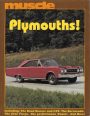
Muscle: Plymouths!
This is a collection of articles about Plymouth muscle cars, including:
Loose on the Streets!: The Plymouth V-8 Story
Plymouths of Significance: A Tale of Sound and Furys
Undercover Musclecars: The Plymouth Police Cars
Birds on the Wing: The Road Runner Story
Pony Cars that Could: The Barracuda Story
Big Three Showdowns: High Noon at Riverside
Musclecar & Hi-Po Chrysler 273-318-340-360
From Hot Rod magazine comes this report on the Plymouth and Dodge musclecar small block V8. Covering 273 power models, building muscle, tuning, spec's, high performance parts, 450hp build-up, Black's Mopar.
Musclecar & Hi-Po Chrysler 361-383-400-413-426-440
Hot Rod' reports on the Chrysler-Dodge-Plymouth big block Wedge V-8. Covering 383 Hop-up, 426 stage II Wedge & Ram-charger, the 440 Wedge, 383 thru 440 tech & hp spec's.
Musclecar & Hi-Po Chrysler Hemi
Hot Rod reports on Chrysler's dynamic Hemi during the musclecar years. It covers blueprinting, HP building, modifying, drag & race tuning, spec's.
Musclecar and Hi-Po Engines Ford Big Block
Hot Rod reports on Ford's big block V-8's during the Muscle car years. Covers 429 Intro, 390 & 428 Cobra Jet, FE & 385 Family, 429 Boss, 427 Wedge, 352-428 & 429-460 development, 405hp 406 and aluminum heads.
Mustang & Mercury Cougar: Parts Locating Guide
Finally, someone has done the research to make it easy to find anything for your Ford Mustang/ Mercury Cougar. The largest source of parts information anywhere. Thousands of new, used, & custom Ford Mustang/ Mercury Cougar parts and literature dealers, clubs, specialty salvage yards and companies that repair & restore original parts. Organized to find what you need quickly and cheaply. Any year, any part, any Ford Mustang/ Mercury Cougar. It's all in here!
Mustang 5.0L Muscle Portfolio 1982-1993
The new 5.0L model was introduced to redress the flagging appeal of the Mustang. With 157bhp it turned the new car into the quickest Mustang in years, with zero to 60mph times of under 8 seconds. In 1983 power was raised to 175bhp and in 1985 to 210bhp. New emissions regulations meant a switch to fuel injection and in 1986 it dropped back to 200bhp. The 1987 facelift brought the power back to 225bhp which lasted until the end of its days. This is a book of contemporary road and comparison tests, specification and technical data, new model introductions, car conversions. Models covered include: 5.0LGT, convertible, Saleen Signature, Project 514, Saleen Mustang, Kaufmann Mustang, JBA/Saleen Mustang, Saleen SSC, LX 5.0L, Saleen SB/S, NOS/Saleen, Mustang SC, Mustang Cobra, Mach III.
Mustang by Design: Gale Halderman and the Creation of Ford’s Iconic Pony Car
Without question, the 1964-1/2 Mustang is one of the most important and influential cars in automotive history. When Ford launched the Mustang, it created an automotive revolution. Award-winning designer and stylist Gale Halderman was at the epicenter of the action at Ford, and, in fact, his initial design sketch formed the basis of the new Mustang. He reveals his involvement in the project as well as telling the entire story of the design and development of the Mustang.
Authors and Mustang enthusiasts James Dinsmore and James Halderman go beyond the front doors at Ford into the design center, testing grounds, and Ford facilities to get the real, unvarnished story. Gale Halderman offers a unique behind-the-scenes perspective and firsthand account of the inception, design, development, and production of the original Mustang. With stinging losses from the Edsel fresh in minds at Ford, the Mustang project was an uphill battle from day one. Lee Iacocca and his assembled team had a herculean task to convince Henry Ford II to take a risk on a new concept of automobile, but with the help of Hal Sperlich's detailed market research, the project received the green light. Henry Ford II made it clear that jobs were on the line, including Iacocca's, if it failed.
The process of taking a car from sketch to clay model to prototype to preproduction and finally finished model is retraced in insightful detail. During the process, many fascinating experimental cars, such as the Mustang I two-seater, Mustang II prototype, Mustang Allegro, and Shorty, were built. But eventually the Mustang, based on the existing Ford Falcon, received the nod for final production. In a gala event, it was unveiled at the 1964 World's Fair in New York. The Mustang received public accolades and critical acclaim, and soon it became a runaway hit. After the initial success, Ford designers and Gale Halderman designed and developed the first fastback Mustangs to complement the coupes. The classic Mustang muscle cars to follow, including the GT, Mach 1, and others, are profiled as well.
The Mustang changed automotive history and ushered in the pony car era as a nimble, powerful, and elegantly styled sports coupe. But it could so easily have stumbled and wound up on the scrap pile of failed new projects. This is the remarkable and dramatic story of how the Mustang came to life, the demanding design and development process, and, ultimately, the triumph of the iconic American car.

Mustang Race Cars
The unmistakable influence of the Mustang on the racing world is seen here in endurance and drag, Trans Am, and GT racing. This major volume draws on the history of factory and privately sponsored efforts to lavishly chronicle the history of factory-produced models that have been put to the test as racing machines. Vivid historical and contemporary images reveal Mustang's 35+ years of competitive racing history.